
The Call with a Clear Request
Start with the thing a person needs
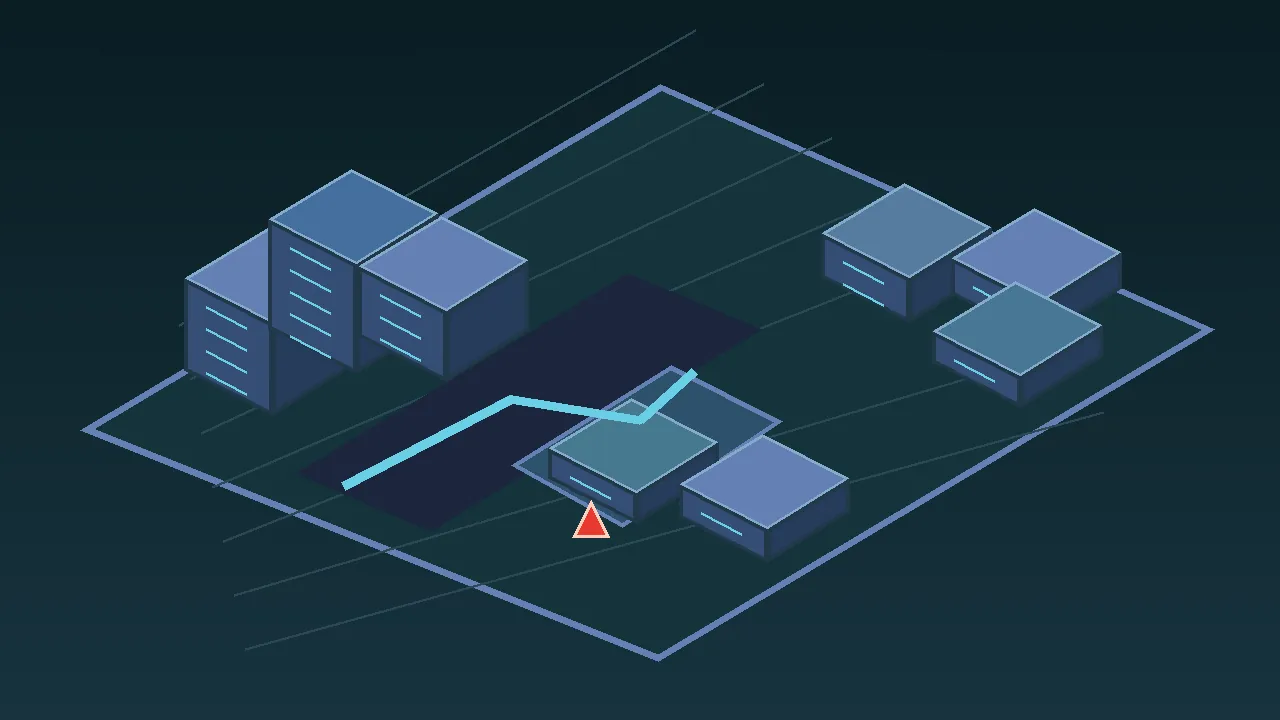
A gate in the fictional market district cannot close properly. An evening worker has already identified the spot where help could reach them. The first entry on the board says that the gate needs attention and that the worker is waiting in the open square. Put a label near the place where the person is waiting and another mark beside the part that needs to be checked. An early drawing moved the whole request marker when the worker changed where they stood. It made the gate look as though it had moved, too. The drawing now leaves an outline around the gate and shows where someone can meet the person. That gives the coordinator enough information to decide on a route.
Compare this call with a routine visit
A planned visit to the flats is already part of the shift. The new market request has a different time. The board shows both and can make one move active. If the market label is the only part of the board a reader can see, they might assign the first team that has a route to it. We want to leave a second path which could preserve the planned visit. Let the player open both strips before moving one. The earlier marker remains on the district plan while the new one reaches a team. Each card names the request in ordinary terms. The designer can explain the timing with the position the card already occupies.
Put the request next to something that stays
The market has a separate small awning on the map. We placed the gate farther to the right, where an existing boundary becomes a useful reference. In the test drawing, the awning and the gate can both be visible when the path to the flats first approaches the buildings. The short label for the market call tells the new route where to go. If the same label appears after the call is taken, move its status into a small box next to the gate. We give the waiting position its own outline in Coverage After the Call. The earlier spot can remain available in a paused frame after a team has taken the call.
Keep other assistance reachable while the board moves
The current picture shows the market route and the place where another request can reach the floor. After one assignment, see whether a team can still help near the flats or take another request after the routine visit. One way to check is to keep the available team at its original point, then start a second drawing with the team closer to a different group. The result needs a readable reason for the later access. A tester should be able to restate the change while the plans are side by side. Two Areas, One Night Desk looks at the common boundary that can remain open in both plans. One source of trouble might be that the team assignment draws across the landmark a later caller is using.
Use a short prompt on the next reading
In the next pass, point to one call and ask a reader where its requester can meet a team. Then ask what that person needs. A short answer to both can identify whether the game gives a useful start before it asks the coordinator to choose who should move. Keep the other visit in view long enough to see whether the choice means it will have to wait. Both views need a visible path and a meaningful result after the call. If one request hides the other’s landmark, adjust the card or give its status more room on the map.