
Two Areas, One Night Desk
Give the shared edge a landmark
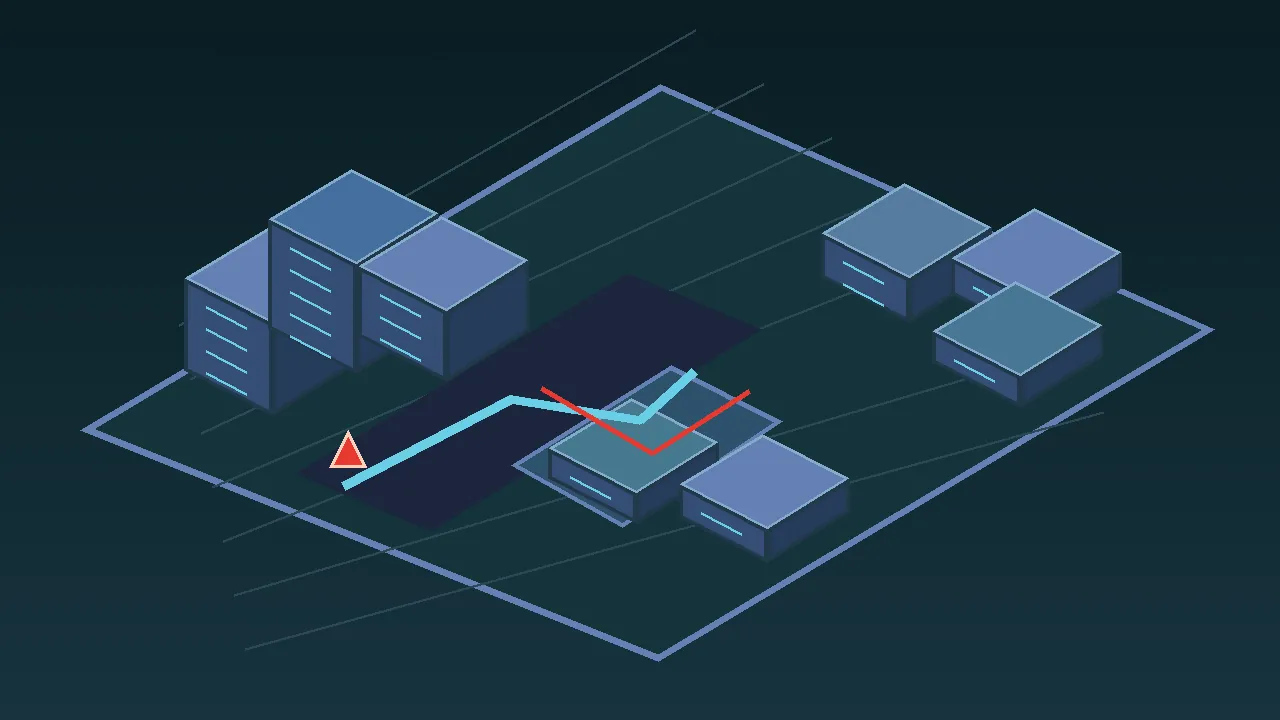
A small square separates the row of flats from the market. The route uses it when a team crosses from an existing visit to an open area or a pedestrian gate. In the first view, both district colors can reach the edge of that square. We drew the path through a strip of dark blue so it would stand apart from the two areas. When the first assignment moved, a reader still needed to see the square because another request would use it after the turn. The shape should belong to the city map, while a moving cover mark and a request label belong to the shift plan.
Mark which team can still reach which request
A shift with two teams needs a place to show an available assignment. We put one team near the market and another in the next district. The marked team that takes the gate request has a route around the square. The other remains where a later householder can reach it. Try a second version with a different first assignment. The later request should show a new result while the earlier district road remains readable. A quick check of the two teams can then help a tester explain an area that stays covered. The player can follow the two routes far enough to see which team had an overlapping path, and compare the earlier visit without needing another map.
Keep the overlapping view available
In Coverage After the Call, a drawing shows both starting areas before an extra request arrives. Two colors blend near the route that each group can reach. We show an outline around that part to provide a second cue once the view is stopped. Underneath, a line names the places that use the overlap. If a reader can see where their route approaches the square they can decide whether a different assignment changes the earlier service. We tried hiding the old route after a move. It made the current map easier to read and left the new uncovered area without its starting context. The chart now preserves a strip of the old route until the player confirms the description of the next plan.
Read the same place from another starting point
Start at the works yard and let the reader move to the market after a call. If the boundary is important, it should stay recognizable from there. Put the district roof shapes on either side and leave the shared road close to the middle. The scene should not require choosing a preferred point of view just to locate the shift change. Compare A Pause at Shift Change, which uses the works yard and the flats in the first two frames. The handoff can keep a separate coverage mark if the same team carries a previous request when it approaches the square. In that case keep the earlier reason for the assignment available next to the change in route.
Check what the player can still describe after a move
The test can ask who is ready to assist a later request as soon as the first visit is assigned. When the path from the flats is hard to see, ask the reader to start at the square and trace it from the end. If they can still point to the same place, their explanation tells us how the overlap changed. If they can only answer from a score at the top, move a clue closer to one of the district marks. Test that with the overlay switched off, and again after moving to the second plan. The answer should give enough evidence to make a useful alternative move without changing the geography of the study.