
A Minute of Overlap
Give the two teams time to see the same thing
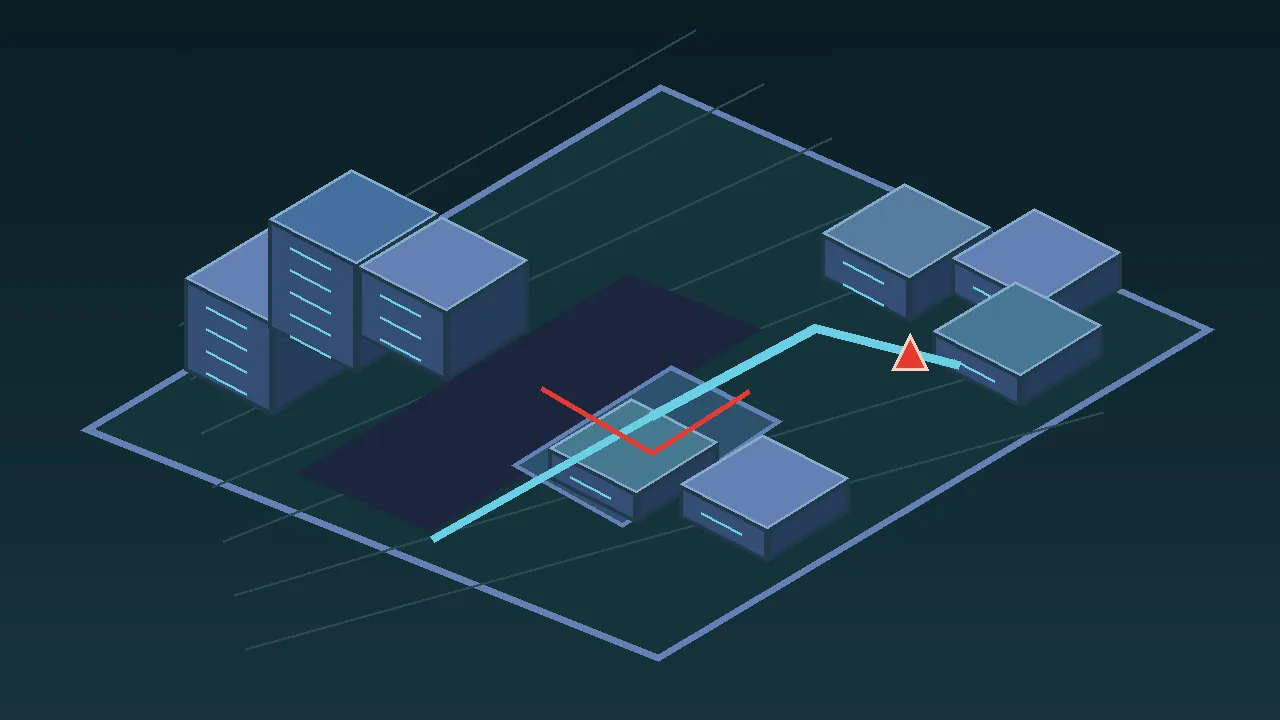
One team in the fictional works yard confirmed that a routine visit needed a follow-up. The next team is still getting ready in a nearby district. We drew a small overlap in the plan so the new team can read what the first one knows while the next call comes in. The overlapping minute belongs to the game’s turn system. If the overlap ends before the second team can reach a clear acknowledgement, the first call appears to have arrived a second time. The drawing can give the old acknowledgement a place beside its location and keep the next assignment more prominent when a new plan has been chosen.
Read the earlier note without moving it
The short label near the works yard has a shape for an understood request. One early version added that shape to the first line of the next team’s plan. It was hard to tell which district it belonged to at the moment the next team moved. We put it alongside the original sign, then introduced a separate mark at the new team’s location. This let a reader see when the second team was still heading somewhere else. A short drawing can maintain both positions until a different team actually takes the old request. A Pause at Shift Change puts that comparison in the plan from the first turn.
Open a clear route before the older one disappears
Look at the place the new team can reach during the overlap. It may have a visible route to a different request close to where it started. If that earliest choice is useful, give the older request an outline that stays on the district until the next team has a chance to take it. Keep the name of the person who can act on it in the near field. The next update can show that the team has reached a site or give an earlier time at which someone else will get there. Draw the new mark far enough away from the first one that both remain readable on a phone. A second view can keep the previous position even when the latest mark has moved.
Try a delay that leaves enough evidence
In one comparison the coordinator holds the next team by the works yard while a question near the flats has a clear position. In the other, the team uses one route and preserves the earlier visit for a later move. See what each choice allows the second person to do. An older acknowledgement means somebody knows about a request. It does not by itself tell the reader when help can reach that place. Draw a Mark That Can Travel follows a request that keeps an identifying shape during the different visits. We want a separate cue for the time you can currently put a team on that request. The result must keep a reason visible when the focus changes.
Put the current team into the next comparison
At the end of the test ask a reader what the new team can do now and which earlier call remains part of its plan. It helps to look at the original acknowledgement first and then at the position the new team can reach. If the reader thinks the old visit vanished, we can keep its mark closer to the shape of the works yard. If the later request is hard to find, compare its point beside the flats with the first route that can reach it. Only add a longer overlap after the reader can identify the useful evidence on both screens. Keep the same neighborhood labels when an old plan reaches the next shift.